The industrial machinery industry deals with the production and distribution of machines used in various manufacturing industries, construction activity, agriculture, mining and other industrial uses.
It is a foundational industry for various other sectors like manufacturing, including textiles, auto, pharmaceuticals, infrastructure growth and agriculture. Major segments of industrial machinery are electrical machinery, which includes machinery related to power generation and distribution, and this is the largest segment; machine tools, which includes production of core machines like CNC, grinding, pressing and other machines for manufacturing; construction machinery, which includes excavators, bulldozers, and automation machinery, which is currently a high-growth area which includes automation and smart manufacturing tools.
As this is an important industry and other sectors are dependent on it, it looks like a safe bet for investment, but it comes with its own challenges and risks, which are discussed in detail in the blog below.
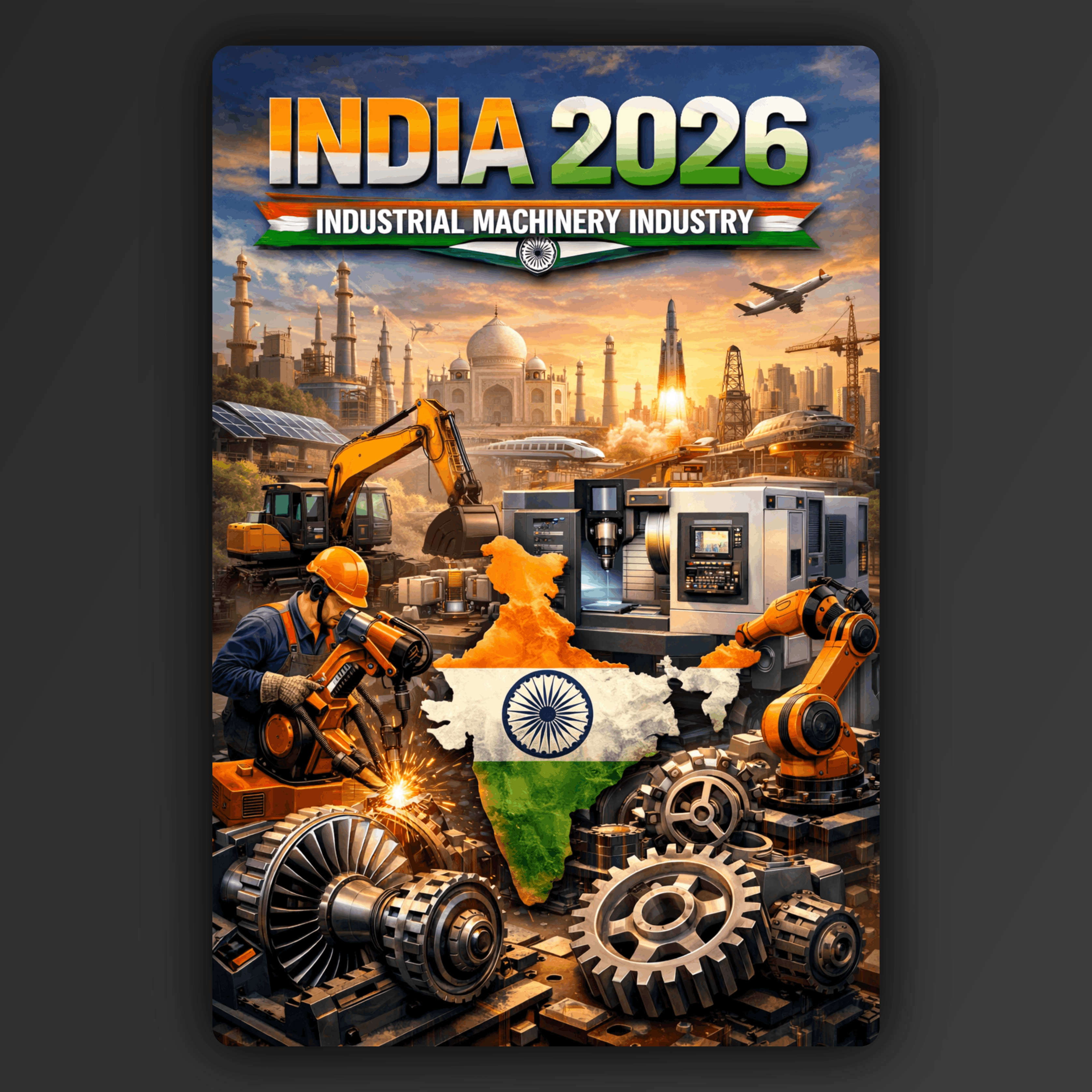
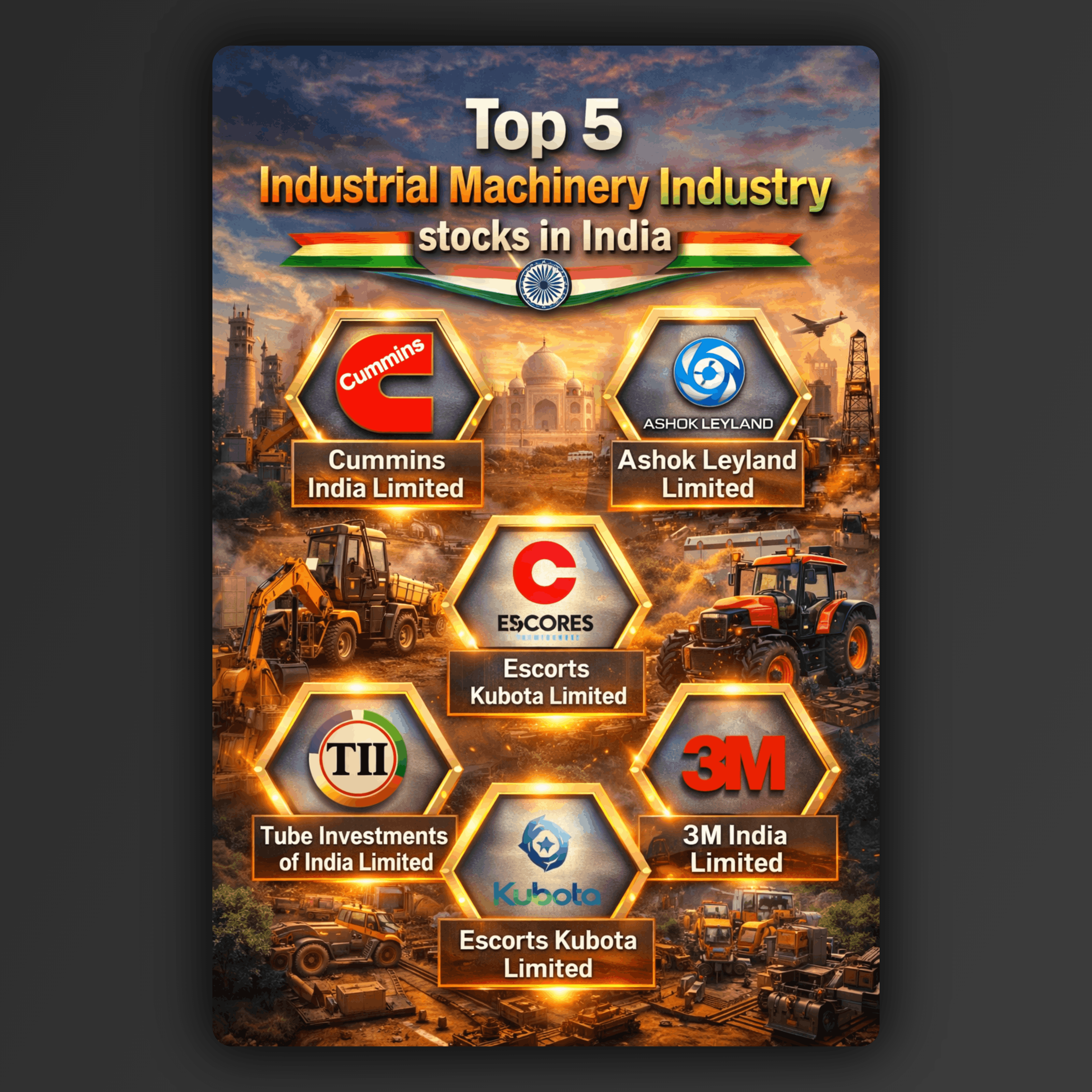
Top 5 Industrial Machinery stocks in India and sub-industries which come under the Industrial Machinery Industry.
Below is the list of top companies under the Industrial Machinery Sector in India.
Top 10 Industrial Machinery Industry Stocks in India
- Cummins India Limited
- Ashok Leyland Limited
- Tube Investments of India Limited
- Escorts Kubota Limited
- 3M India Limited
- Thermax Limited
- Godrej Industries Limited
- Honeywell Automation India Limited
- PTC Industries Limited
- Timken India Limited
Historic Policy Trends and Changes for Industrial Machinery Industry in India.
2020 : The government started discussion on domestic production of machinery, which comes under the Atmanirbhar Bharat initiative.
2021 : The PLI scheme boosted textile machinery production by 130%, which was also driven by global demand as exports of textile machinery increased by 58%
2022 : The government launched the second phase of “Enhancement of Competitiveness” for the development of infrastructure for common technologies and an advanced centre of excellence, and also the government has formally recognised heavy engineering capital goods as a strategic sector.
2023 : The government issued “Quality Control Orders”, i.e., QCOs, on imports of machinery, which is mainly to encourage domestic sourcing.
2024 : To open export markets for Europe, Japan and North America, the government rolled out new emission standards called “Construction Equipment Norms” for construction equipment.
2025 : The government has modified the PLI framework to prioritise domestic manufacturing of heavy machinery, robotics and heavy electrical equipment. Also, the government has reduced the minimum investment from 300 cr to 150 cr for textile machinery capacity to increase participation.
Summary of above Policy Trends.
As per the last 5-year trend in policy formation by the government for the industrial machinery industry in India, the government focus is on localising production of industrial machines by providing benefits through PLI schemes, “Enhancement of Competitiveness” for development of infrastructure for common technologies, and also to maintain top quality for fulfilling European and North American standards, the government has issued new emission standards called “Construction Equipment Norms” for construction equipment. The government is continuously modifying the PLI scheme to make sure the industrial machinery sector is getting more and more benefits, as other sectors are dependent on this industry, and localising production for industrial machinery would make it easy for other dependent industries as well.

Fundamental Position of the Industrial Machinery Industry in India 2026
Below are the basic fundamental ratios and positions of the industrial machinery industry in India.
- Average PE ratio :
- 35.7
- Total Market Cap of the Industrial Machinery Industry in India :
- USD 85 Billion
- Growth Rate of Industrial Machinery industry in India :
- 2-5%
- Revenue Growth of the Industrial Machinery Industry in India :
- 8-10%
Recent Trends for the Industrial Machinery Industry in India 2026
- Industrial automation machinery like CAGR sensor-enabled, cloud-connected machinery and AI-driven predictive maintenance is growing at a rate of 10%.
- The machine tool market just hit USD 3.9 billion in 2025 with a growing focus on localising aerospace and defence manufacturing.
- With increased demand for electronic motherboards, chip fabrication display manufacturing machinery is also growing at good rates.
Future Outlook and Scenario for the Industrial Machinery Industry in India 2026
- The machinery industry in India is transitioning from an assembly-focused to a design-centric approach where the main focus is on research and development, precision engineering and IP creation for low-cost production.
- To fulfil India’s 500 GW renewable energy target, demand for renewable equipment machinery is growing at a rate of 17%.
- Industry is shifting towards ecosystem-driven manufacturing, and verified suppliers are gaining importance.

Risks in the Industrial Machinery Industry in India 2026
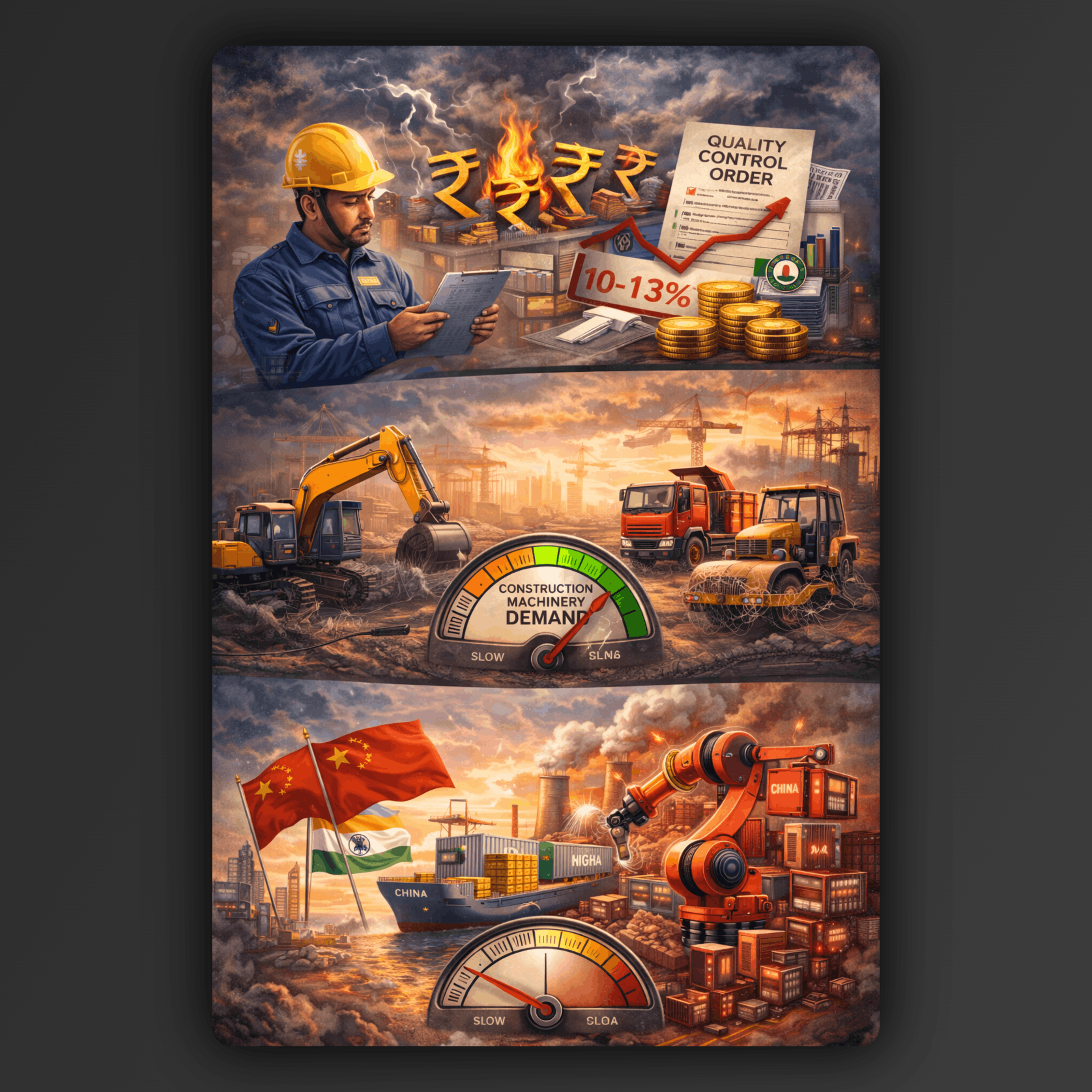
- New quality control order would require the company to spend 10-13% more to comply with these standards.
- Slowed down demand for construction machinery, which is around 2-3% only.
- Extreme competition from China, as it is dumping low-cost and highly efficient machinery in India.
Conclusion
India’s industrial machinery industry is very crucial, as it is a foundational industry. Other sectors are dependent on this sector, especially the manufacturing and construction sectors. For this industry the government is trying to localise the production of machinery through PLI schemes, and also the government focus is on making high-standard machinery to meet European and American norms and make exports more feasible. In the recent trends, automation machinery like CAGR sensors, cloud-connected machinery and AI-driven predictive maintenance are growing at a rate of 10%. Also, demand for renewable equipment machinery is growing at a rate of 17% to fulfil the 500 GW target of renewable energy. With all the growth for the industrial machinery industry in India, there are a few challenges as well, which include the new “Quality Control Order”, which would require the company to spend 10-13% more to comply; slowed-down demand for construction machinery, which is around 2-3% only; and extreme competition from China, as it is dumping low-cost and highly efficient machinery in India.