The Construction Materials industry deals with manufacturing and distribution of cement, aggregates, bricks, steel, paint, hardwares, insulations, wood panels, along with increased use of sustainable materials like fly ash bricks, and high performance insulations. India’s construction materials industry is thriving because of massive infrastructure spending, rapid urbanisation and as India is a developing country with a big population it has huge housing and infrastructure demands.
The Construction Materials industry of India is very crucial as it contributes around 8% in India’s GDP, and also a major job creating industry. With focus on sustainability eco-friendly materials and practices are thriving, like fly ash bricks, and high performance insulations. While strong growth is expected to continue it has some challenges as well like supply chain management, competition and others, below is the detailed analysis of construction Materials Industry and does it make sense to invest in construction Materials Industry in 2026.

Top 5 Construction Materials stocks in India and Sub-industries which come under the Construction Materials Industry.
Below are the list of top companies under Construction Materials Sector in India.
Top 10 Construction Materials Industry stocks in India
- UltraTech Cement Limited
- Ambuja Cements Limited
- Solar Industries India Limited
- Shree Cement Limited
- Berger Paints India Limited
- Steel Authority of India Limited
- Linde India Limited
- J.K. Cement Limited
- Dalmia Bharat Limited
- ACC Limited

Historic Policy Trends and Changes for the Construction Materials Industry in India.
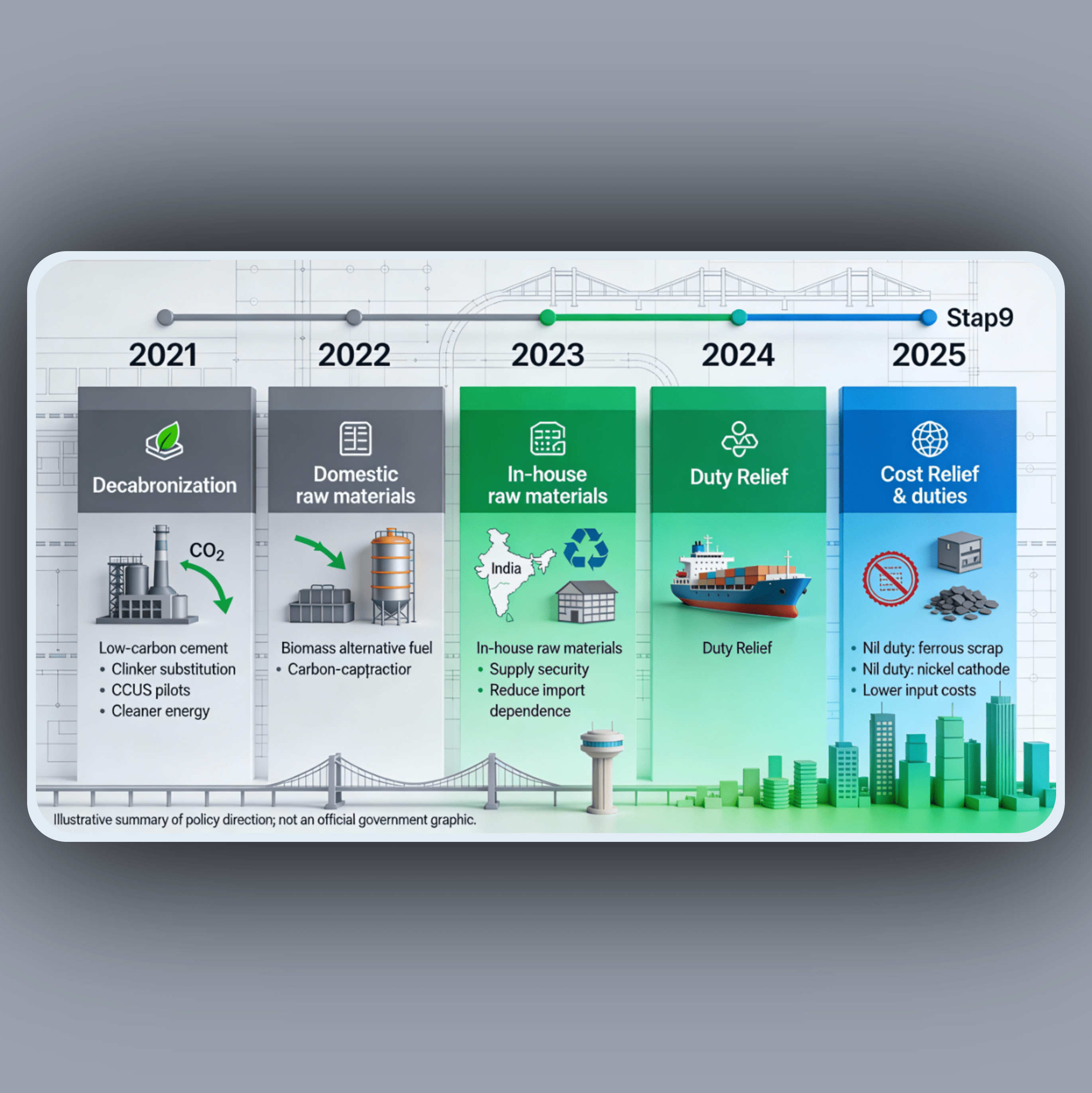
2020 : Government started creating layouts and roadmaps to decarbonise the construction material industry as much as possible, like low-carbon cement and CCUS pathways.
2021 : To reduce dependency on imports and support construction demand Indian government has approved PLI scheme for speciality steels.
2022 : Government has continued planning on shifting towards sustainable alternatives and included this in India’s long term plan for low-carbon development strategy.
2023 : Government gave custom duty relief for various raw materials used in steel manufacturing like ferrous scrap, nickel cathode.
2024 : This year PLI scheme for speciality steels started implementation with investment flowing majorly into higher-grade steel capacity.
2025 : This year government has prepared a National Green Steel Mission which combines with existing PLI scheme incentives for green hydrogen and procurement of green steel majorly for public projects.
Summary of above Policy Trends.
As per the last 5 years trend in policy formation by the government for Construction Materials Industry in India, the government focus is on transforming the construction material industry to a lesser carbon emitting industry, also focused on developing various raw materials in-house to reduce foreign dependencies and fulfil high demand. Government has also given relief for custom duty for various important raw materials like ferrous scrap, nickel cathode to reduce manufacturing costs.
Fundamental Position of Construction Materials Industry in India 2026
Below are the Basic Fundamental ratio and position of Construction Materials Industry in India.
- Average PE ratio :
- 27.2
- Total Market Cap of Construction Materials industry in India :
- USD 150 Billion
- Growth Rate of Construction Materials industry in India :
- 6-9%
- Revenue Growth of Construction Materials industry in India :
- 9%
Recent Trends for Construction Materials Industry in India 2026
- Steel and Cement saw 14% YoY growth in 2024, while the top 5 cement companies hold around 60% of the market share.
- Construction Materials costs increased for 60-70% of the projects majorly because increased raw material price, and supply disruptions.
- Modular precast(Factory built components) are rising because it reduces construction time by months, which is improving efficiency in infra projects.
Future Outlook and Scenario for Construction Materials Industry in India 2026
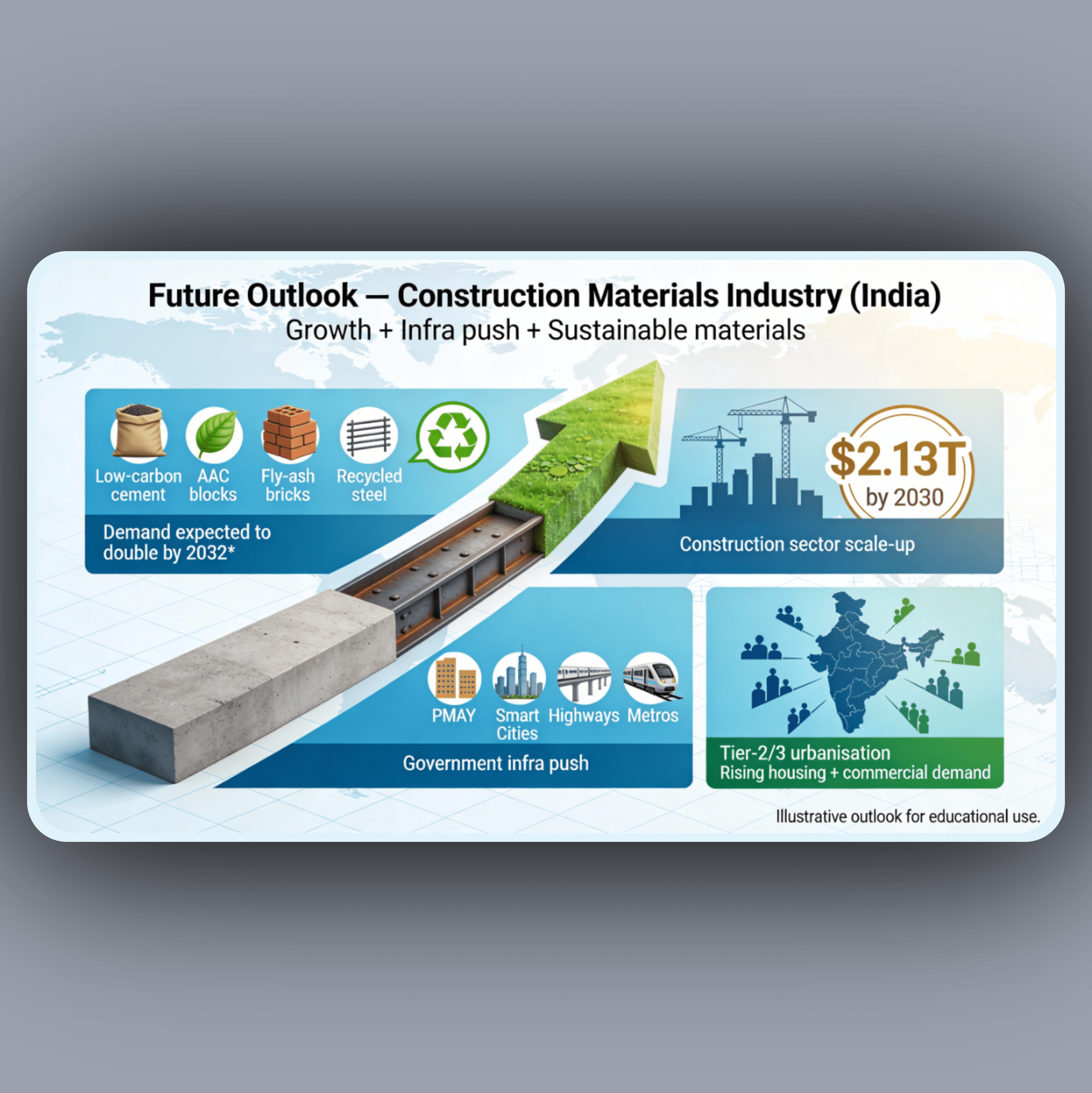
- Sustainable alternative construction materials demand are rising and expected to be double by 2032, this includes fly-ash bricks, recycled steel, low carbon cements and AAC blocks
- Overall the construction sector may hit 2.13 trillion USD by 2030 which will increase the demand for steel and cement.
- Infra push by the government would push demands for construction materials with current infra schemes like PMAY, Smart Cities, highways, and Metros.
- Rapid Urbanisation in tier 2/3 cities will boost demands for construction materials in India.
Risks in Construction Materials Industry in India 2026
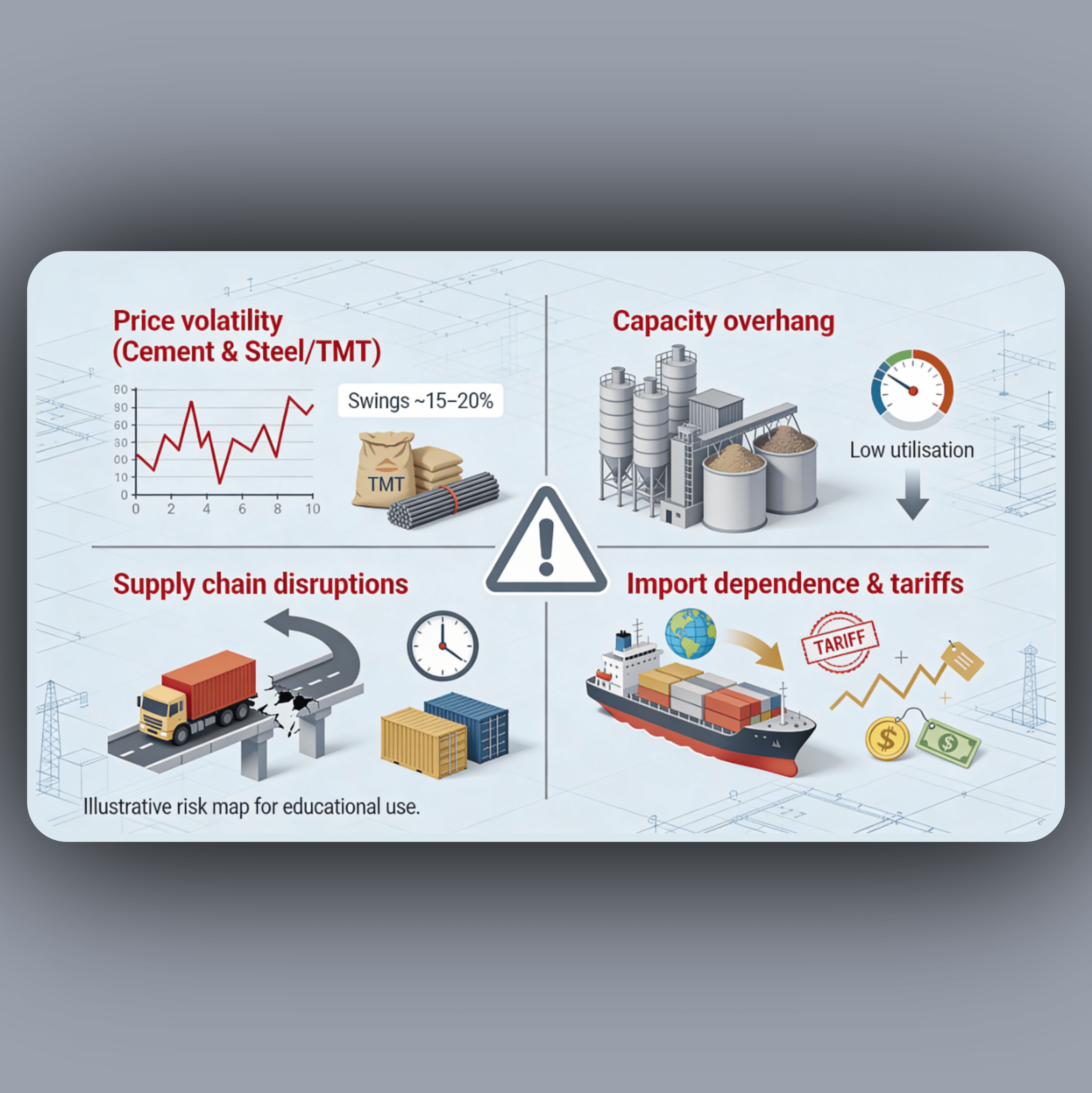
- Price volatility for cement and steel/TMT bars which swings around 15-20%.
- Capacity overhang which includes over production of cements causing low utilisation and lesser profits.
- Supply chain related issues which cause late deliveries.
- Dependencies on imports and tariffs make this industry a little more volatile.
Conclusion
India’s Construction Materials Industry is contributing around 8% of the India’s GDP and generating major employments, in developing country like India where major infrastructure are continuously developing like expressways, metros, residential properties and office spaces which all requires construction raw material like cement, steel, paint and others due to which this industry is growing at a rate of more than 9% yearly and is expected to grow with same or better rate, the sustainable alternatives like fly-ash bricks, recycled steel, low carbon cements and AAC blocks are expected to grow at better rate when compared with the industry average as it has the government push and improves efficiency, but all the good growth comes with challenges as well, like price volatility for cement and steel/TMT bars, over production of cements and supply chain related issues.